Lithium-Ion vs Lead-Acid Batteries: Which Is Better for Your Solar System?
Picture this: it’s 8 pm, the lights go out, and your neighbours are scrambling for candles. In your home, the fan keeps turning and the fridge keeps humming. That’s the quiet job of a solar battery. Your panels make power while the sun shines, and the battery holds on to it for the evenings, the cloudy days and the outages.
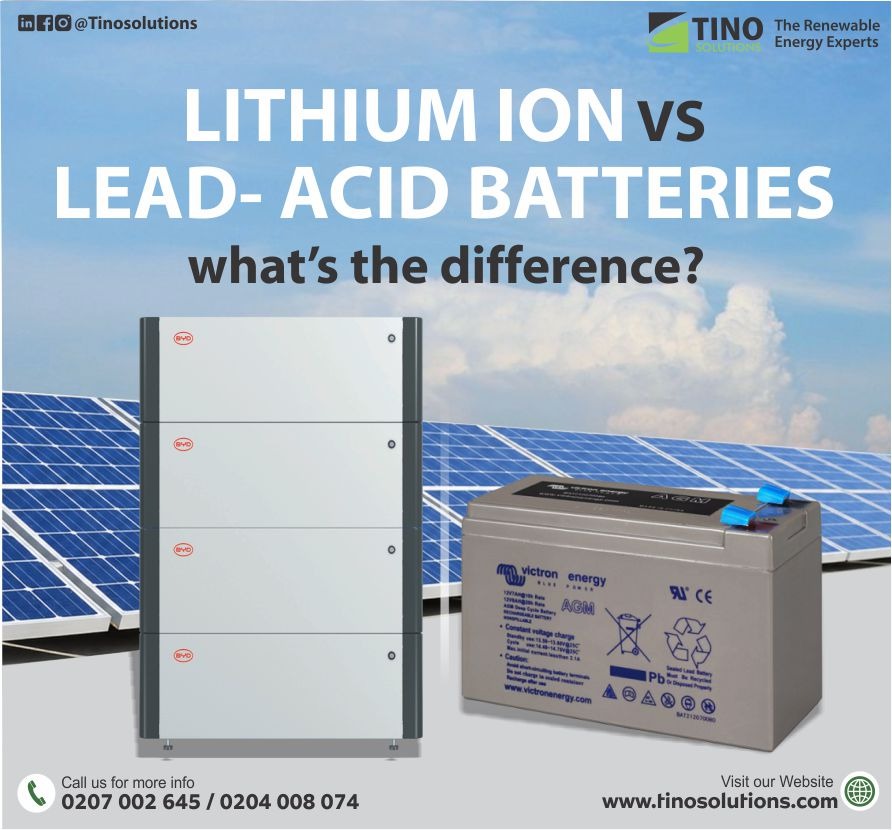
When it’s time to choose one, you’ll usually be weighing two options: lithium-ion and lead-acid. They do the same basic job, but they differ in how much of their capacity you can use, how efficient they are, how long they last, how much care they need and what they really cost over the years. Lithium-ion batteries, especially Lithium Iron Phosphate (LiFePO4), are becoming the go-to for modern solar systems. Lead-acid is still a trusted option, particularly if keeping the upfront cost low matters most to you.
How much of the battery can you actually use?
Here’s something that surprises many people: the number on the label isn’t the energy you get to use. What matters is depth of discharge (DoD), the share of the battery’s stored energy you can safely use.
Take a 10 kWh battery with a recommended DoD of 50%. You’ll get about 5 kWh of usable energy, half of what you paid for. Lead-acid batteries are usually run at around 50% to protect their lifespan. Many LiFePO4 batteries can safely go to about 80–90%.
So a 10 kWh lithium-ion battery gives you noticeably more usable power than a 10 kWh lead-acid one. If your household or business uses most of its electricity in the evening, that difference shows up every single day.
How long will it last, and how much energy is wasted?
Think of charge cycles as the number of “working days” a battery has in it. Lithium-ion batteries typically deliver around 3,000–6,000 cycles or more, depending on the brand, the conditions and how deeply they’re discharged. Lead-acid batteries generally give fewer cycles, and they wear out faster if they’re often drained deeply, so you may be replacing them sooner.
Efficiency matters too. Every battery loses a little energy when storing and releasing power. Lithium-ion systems typically lose only about 5–10% (round-trip efficiency of around 90–95%), while lead-acid systems lose more, with efficiency of around 70–85%. In plain terms, more of the sunshine you capture ends up powering your home.
What’s it like to live with?
Flooded lead-acid batteries need a bit of looking after, with regular electrolyte checks and proper ventilation. Sealed AGM and gel versions are easier to live with and need less routine care.
Lithium-ion batteries are usually the more hands-off choice. Most come with a Battery Management System (BMS), a built-in safeguard that watches over the battery and protects it from overcharging, over-discharging and overheating.
That said, “low maintenance” doesn’t mean “install it anywhere and forget it.” Lithium batteries still need compatible charging equipment, the right inverter settings and proper electrical protection. And here in Ghana’s warm climate, good ventilation, a sensible location for the battery and sticking to the manufacturer’s guidelines make a real difference to how well it performs year after year.
Side by side
| Lithium-ion (LiFePO4) | Lead-acid | |
|---|---|---|
| Usable capacity (DoD) | About 80–90% | About 50% |
| Lifespan | Around 3,000–6,000 cycles or more | Fewer cycles |
| Efficiency | About 90–95% | About 70–85% |
| Day-to-day care | Usually low, with a built-in BMS | Flooded: regular checks; AGM/gel: less |
| Upfront cost | Higher | Lower |
So, which one is right for you?
There’s no single winner. The right battery is the one that fits how you live and what you can afford.
Lithium-ion is a great fit if you use power every day, especially in the evening, if the battery will be charged and drained often, or if you’re short on space.
Lead-acid can still make sense if your system is small, your battery is there mainly as occasional backup, or keeping the initial cost low is your top priority.
At Tino Solutions, we always encourage our customers to look beyond the price tag. Ask how much energy you can really use, how long the battery should last, how efficient it is, what care it needs, whether it works with your inverter and what the warranty covers. A cheaper battery that needs replacing sooner isn’t always the cheaper choice in the end.
The best battery is the one that keeps your home or business running reliably and gives you good value for years to come. If you’re not sure where to start, talk to us. We’re happy to help you work it out.